John Healey’s speech to Labour Party Conference 2026
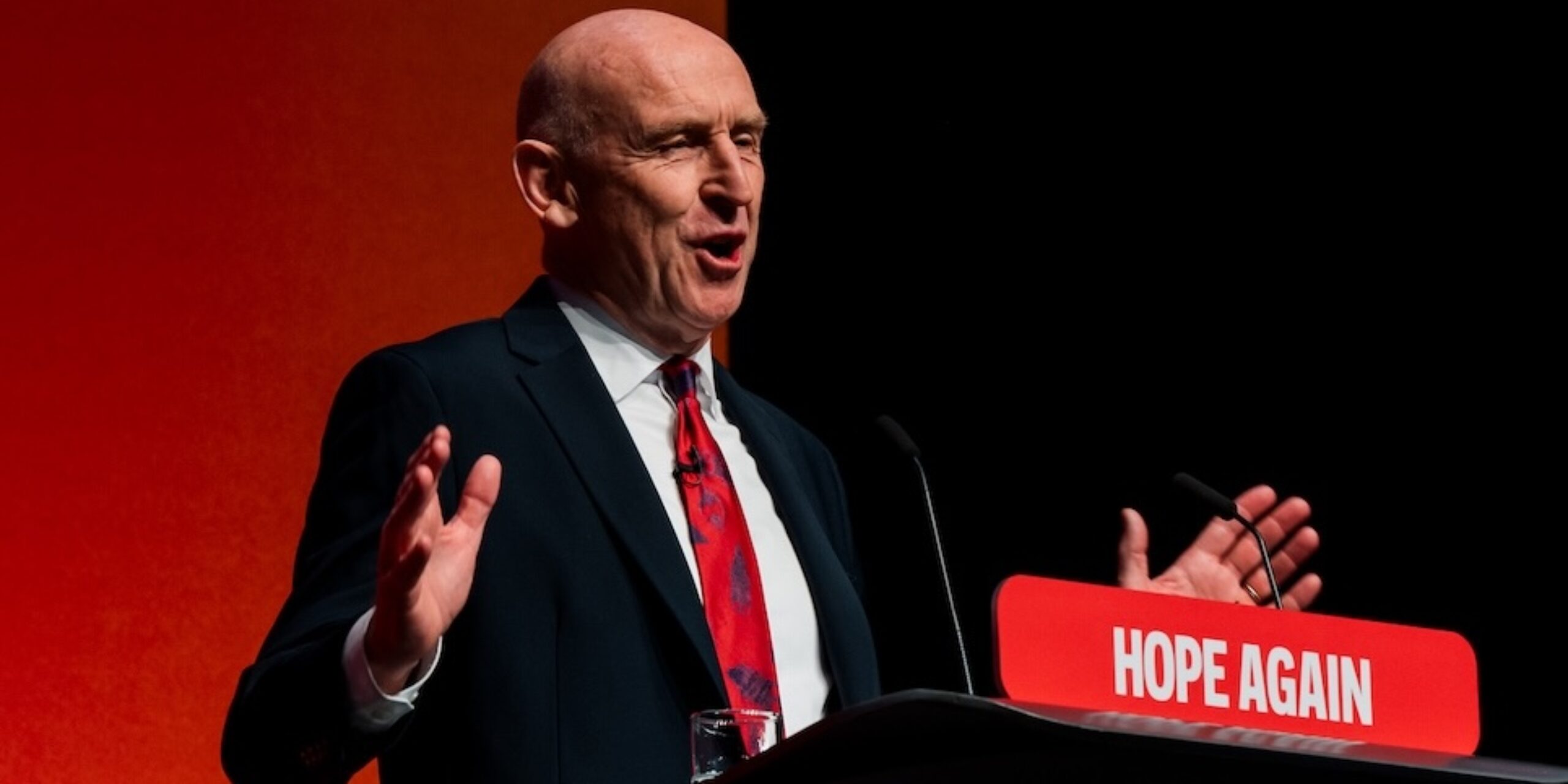
Hear from John Healey, Chancellor of the Exchequer, at Labour Party Conference 2026.
Conference, thank you. I can’t tell you how good it is to be with you.
John Healey.
Rawmarsh & Conisbrough CLP.
GMB and Community unions.
Chancellor of the Exchequer.
Now Conference, I have to be honest.
I’m no first-time delegate.
My first Labour conference was in 1986, 40 years ago, in Blackpool.
Back then, I had hair.
Back then, Neil Kinnock was leader – he was calling for sanctions on apartheid South Africa.
John Smith was calling for an industrial strategy to deal with the Tory slump.
John Prescott was just arguing.
But it was a vibrant time, it was a vibrant time, and I still get that very special energy that comes when the Labour movement gets together at conference.
So Conference, it is the privilege of my life to stand before you today as Labour’s Chancellor of the Exchequer.
And to have this man as our Leader.
Our Prime Minister – and as he likes to remind us – the first ever Co-operative Prime Minister of this country.
Andy, you have the vision, you have the determination, and you have the plan to get things done.
To give people hope again.
And frankly anyone who can do the Great North Run in under two hours just deserves respect!
I do have to say though, you’re still wrong about the best pub snack.
And I know Manchester is a great city, just like Liverpool is a great city.
But give me Rotherham any day of the week.
Conference, before I go any further, I want to pay tribute to our former Chancellor Rachel Reeves.
She brought to this country financial discipline, she delivered two Labour budgets that mean we’re cutting NHS waiting lists and we’re lifting half a million children out of poverty.
And after 800 years, she will always be recognised as this country’s first-ever female Chancellor.
And to Keir Starmer.
He took on this party as our leader.
He took us from one of our worst-ever defeats to one of our biggest-ever victories.
And then as Prime Minister, he rebuilt Britain’s respect and international reputation, especially standing up to Russia in defence of Ukraine.
On behalf of us all, we thank you, Keir.
And you know, as politicians, we can only be as good as the people who work with us, and work behind us.
So I can’t tell you how fortunate I count myself to have this talented team of Treasury ministers:
Emma and Lucy, Torsten, James, Dan and David.
And a small dedicated team who work with me in the constituency office.
To you all, I say a huge thank you.
And finally, there’s someone else I want to thank.
When I say Labour is my family, I mean it literally.
My guide, my inspiration, my blessing, my wife Jackie.
Jackie is a third-generation Labour activist.
You know, her Grandma Jones kept Labour Party meetings running throughout the Second World War in Stoke-on-Trent, even during the bombing raids.
And Jackie worked in Labour HQ. I worked for the MSF union.
We met at a union conference and within two weeks we were engaged.
And she’s been by my side ever since.
Jackie, thank you.
Conference, today, I want to talk about the politics of hope.
Our belief in a better day.
Our conviction that committed citizens can change the world.
No matter how hard the task, how daunting the odds.
This is our Labour politics.
The hope that is earned.
Earned through fiscal discipline, through good work and through strong industries.
So, I want to tell you how we’ll bring back hope.
How we’ll get Britain growing.
With hope for our young people.
With good work, good jobs and a new age of industrialisation.
Because Conference, I believe in Britain and we believe in Britain.
Conference, I’m a proud optimist.
I’m also a proud Yorkshireman, representing a former coalfield community.
Like many in our area, I have a miner’s lamp on my shelf at home.
Those miners didn’t just use their lamps to light their own steps, they shone them to help others.
A symbol of solidarity. A symbol of hope.
That no matter the darkness, there’s always light at the end of the tunnel.
And you know, the same goes now for Britain’s future.
Why?
Because this country has such resilience, such strengths, still such greatness.
We’re home to nearly half the most innovative companies in Europe.
We’re world-leaders in life sciences, in defence tech, in AI.
Our financial services, led by London, are some of the best in the world.
Our theatre, our TV shows, our fashion, our music is treasured the world over.
And we have the best people.
The veterans in the Royal British Legion at Remembrance.
The winners of the Daily Mirror’s Pride of Britain awards.
The lifeboat volunteers of the RNLI risking their own lives to save others in danger on the sea.
This is the quiet patriotism that makes Britain great.
So, despite everything that we face, there are many reasons for optimism.
New leadership. New confidence. And new hope.
Conference, much as I believe in Britain, I also believe in Labour.
In what we can achieve by the strength of common endeavour.
I was part of the Labour government in 1997 that rebuilt Britain after 18 years of Tory failure.
Leaving the country fairer.
Giving the next generation a better start in life.
From the day they’re born in the NHS to the schools they go to, to the first job they get.
And Labour in power – at our best – has always been about building institutions that we pass on to the next generation.
The NHS. NATO. The Open University. The national minimum wage. The Good Friday Agreement.
And Conference, in just the last two years, look at what we’ve achieved as a Labour government.
Railways coming back into public hands.
New rights for renters. New rights at work. British Steel saved.
And look at how we acted in Andy’s first week as Prime Minister.
We acted on the cost of living pressures.
We cut VAT from electricity bills.
We capped bus fares at £2.
We reduced business rates on pubs, clubs, and music venues.
To give people just a bit of breathing space.
A bit of breathing space today and hope for tomorrow.
Conference, if we don’t talk up Labour’s actions, no one else will.
So here’s my first challenge to you as your Labour Chancellor: be confident in who we are.
Be confident in our past. Be confident in our future.
Let’s tell the story of how Labour can deliver change.
How we can change lives, and how we can change this country.
Let’s tell people what we’ve done, what we’re doing, and what we will go on together to do.
Labour – creating hope again!
Now I first worked in the Treasury under Gordon Brown, in the late nineties and noughties.
It was New Labour, New Promise then
And Gordon was and is an inspiration.
His determination.
His drive.
His block cap emails in the middle of the night.
And I joined him in 1999 and one of my first duties was to join him at Labour Party Conference in Bournemouth that year.
He had been at the IMF, he flew in overnight and arrived just before he was due to give his conference speech.
So I was in this small room with this big group of Gordon’s top aides.
I was the new boy, they were big names then.
Ed Miliband was there, Douglas Alexander was there, Ed Balls was there.
Suddenly, Gordon was just about to go on and I said:
Gordon needs a red tie!
And the only person in the room wearing a red tie was me.
So in 1999 in Bournemouth, Gordon made his speech as Chancellor with my tie.
I did get it back, he signed it and I’ve never worn it since.
Until today.
Now I know the nineties is having a bit of a revival,
To Andy’s excitement, Oasis are going back on tour.
To Angela’s joy, Gladiators is back on Saturday night TV.
But I have to level with you, Conference.
The money New Labour had in the nineties is simply not there now.
Economic growth under Gordon was more than double the Tory years that followed.
And Britain has it harder now.
We had 14 years of flatlining Tory growth and living standards – when Cameron’s austerity gutted our public services.
When Johnson’s Brexit hammered our exports.
And Truss’s mini Budget crashed the economy and collapsed confidence in Britain’s fiscal strength.
They lost control of Britain’s finances.
They left a legacy of sky-high debt costs – for families and for government.
And yet Kemi Badenoch – her new Shadow Chancellor is the very minister who helped Truss write that mini Budget!
And even now, he still claims there were “lots of good things” in it!
So, I say to them:
Your reckless actions are still causing pain for people today.
You left crumbling public services.
And you left Britain spending more on debt than the Home Office, Defence and Justice put together.
And people won’t forget, people won’t forgive.
The cost of the nation’s debt is not just a number in a Chancellor’s Budget.
It’s the money that we can’t spend on the NHS, on schools, on housing, on social care.
On policing our streets, on controlling our borders, on defending our country.
And I tell you these levels of debt are an assault on our common sense, they are an affront to our values.
And that’s why the Prime Minister and I are in lockstep that we will meet the fiscal rules.
That we will maintain control of Britain’s finances.
And it’s not just the debt the Tories have left us.
Over the decades – as Andy has argued – this country has seen:
Political power centralised.
Economic control privatised.
Britain deindustrialised.
And the result?
Too many people today feel that Britain hasn’t been working for them, for their family, and for their area.
And we also know how worried people are about the cost of living. The insecurity of work. The cost of business.
And they’re worried about the world, and they’re right.
Because the worldwide economic shocks, conflicts, trade tensions are felt hard here at home.
From the prices at the pump to the cost of the monthly mortgage payments.
But Conference, you know what?
These times demand of us a greater resolve, a greater determination, and a greater hope.
To build a more resilient country.
And remember, Conference, we are Labour.
It was Labour that stepped up to clear the slums and build the council houses during the Great Depression.
It was Labour that stepped up to build NATO and the NHS after the war.
It was Labour that stepped up to lead the world through the global financial crisis.
When times are tough, we step up.
And now, Conference, we are stepping up again.
With a Plan for Britain.
With our international leadership.
And with our Labour values.
That is the Labour I know.
That is the Labour I love.
So let me tell you how we’ll do it.
How we’ll bring fresh hope to Britain.
Built on the rock of fiscal discipline.
Built on a growing economy, with good work and jobs in more places.
Built on a new age of industrialisation.
On day one as Chancellor, I said my first duty is fiscal discipline.
And I’ll tell you why.
It underwrites every promise this Government makes.
On growth, on jobs, on national security, and on public services.
We can’t succeed without it.
That’s why the Prime Minister and I are united in meeting the fiscal rules.
Balancing the books, with a buffer against uncertainty.
Controlling borrowing to bring down inflation.
And reducing long term pressures on our finances.
Conference, that commitment is so important.
There’s nothing progressive about losing control.
Because it’s working people who pay for it.
And Conference, just look at who offers the opposite.
It’s not just the Shadow Chancellor.
But Reform UK.
Dodgy donors, fantasy funding behind every plan.
And Nigel Farage, he wants you to think he’s a man of the people.
But when it comes to the economy, he’s Liz Truss with a Bitcoin account.
That’s not my politics. That’s not our politics.
And so, through the core of the Budget I deliver a month today will be fiscal discipline.
To give families and businesses a bit of breathing space.
To drive good growth and jobs in more places.
And to write a new chapter of hope for Britain’s future.
Conference, that miners lamp on my shelf at home in Rotherham came from Cortonwood Colliery – the pit where the miners’ strike started.
Where Thatcher’s crusade against coalfield communities started.
And our last pit – in Silverwood – was closed by the Tories in 1994.
The jobs went away.
Hope and opportunity went too.
One in three men were unemployed.
So when I was first elected, I had as my first top three priorities jobs, jobs, and jobs.
And now, as then, I still have that burning determination.
Good work. Good jobs. Britain working again.
This Party, our party, was founded by workers, for working people.
The rhythms of work, the value of work, the pride that good work brings.
That’s been Labour’s watchword for more than 100 years.
In the 30s, it drove the Jarrow Crusade to London.
In the 40s, it drove the Attlee Government to build full employment.
And in the 90s, it drove Gordon and Tony to launch the New Deal for Young People.
Getting them off benefits and into work for the first time.
Their futures transformed. And making their contribution to the future of the country.
Now, Conference, we all remember our first job. Mine was in a pub called the Milburn Arms in North Yorkshire. I washed pots and glasses.
I worked for John and Betty Young.
They worked me hard, but fair.
And that job taught me the basics – about turning up on time, about getting on with others, about respecting those with more experience.
It also taught me the glory of a hand-pulled pint.
But every person, every young person should know the pride of getting their first job, and taking home their first pay check.
And while I learnt about work in the Milburn Arms, it’s Alan Milburn’s work now, for government, that lays bare the scale of the challenge young people face once again today.
After Covid, and before the election, the Tories let the number of young people in this country not in employment, in education, or training rise to nearly one million.
Two thirds have never worked.
Potential wasted. Ambition frustrated. Opportunity closed.
Signed off, written off.
And I know it’s tough for young people today.
Some find it hard to face the world.
And I hear the fear in their mum’s and dad’s voices when they talk about their kids’ futures, when they talk about the dark forces on the internet.
And our social security system must always be there for those who can never work.
But for everyone else, benefits should be a bridge to work, to wider participation, to a better life, not a trap that people can’t escape.
And Conference, it is simply not progressive to allow a bigger and bigger benefits bill and a system which offers an income but doesn’t offer a future.
So once again, as a Labour Government it falls to us to act.
And this is more than an economic must.
This is a moral duty.
And Conference, I refuse to write off a million young people like the Tories have done.
When some people see a million youngsters with no work and no training, they see despair.
I see hope.
I see the future workforce of a reindustrialised Britain. Future business founders. Future union stewards. Future homeowners.
I see a generation born this century, digital natives, whip smart, questioning, ambitious, brave.
I see the best asset we have in Britain: in our young people.
And I believe this generation has the potential to be a great generation.
I believe we can help this generation move from Generation Jeopardy to Generation Hope.
Let me tell you about an apprentice pipe fitter called Ste.
I met him on Saturday when I went with Andy Burnham and Mayor Steve Rotheram on the first newly built ferry across the Mersey in 60 years.
Ste helped build it, built here on the Mersey at Birkenhead.
And I asked him what advice he would give to a younger brother or sister about apprenticeships.
And he said: “Just go for it.”
“Just go for it” he said, “because you’re earning and learning at the same time. And you can take these skills anywhere in the world.”
Well Conference I’m happy to say that Ste is here today with some of those other apprentices, 150 at the Cammell Laird yard, that helped build that ferry.
Lads, it’s great to see you today. Thanks for joining us, and thanks for what you’re doing for this great city.
So today I want to announce a downpayment on Alan Milburn’s work.
A Local Apprenticeships Service, expanded to more places, led by Mayors, targeted at these young people.
Delivering thousands more apprenticeships for those young people.
With local teams, a bit like football scouts for apprenticeships.
Local teams who will go to local firms that’ve never taken on a trainee, and say: we’ll help you do it.
That will go to the youngsters who’ve been out of work and say: we’ve got a place for you.
Led by mayors, because it’s the mayor that knows their areas best.
They know which firms are hiring, they know which colleges are delivering, and they know which estates have been left behind.
That’s what devolution means.
And we had planned to start in a few areas. Now every mayor will have the chance to do it.
Backed by an extra £100 million, fully funded by savings from the DWP.
Because Conference the best thing we can offer a young person isn’t a benefit payment.
It’s a first job. With training. And a wage.
Our determination to help matched by their determination to hope.
Conference, my politics have been shaped by the industrial heartlands of South Yorkshire.
The most brutal day of that bitter Miners’ strike was at Orgreave.
Today, on the site of the Orgreave pit, is Rotherham’s Advanced Manufacturing Park.
One of the most concentrated areas of innovation anywhere in Britain.
It’s where South Yorkshire’s young people are working with high-tech systems, making things that their grandparents could never have dreamed of.
And one of those young people is Sean.
Sean’s dad was a local miner – but there were no pit jobs for Sean.
So he joined the Advanced Manufacturing Research Centre, he joined as an apprentice.
So while his Dad mined the coal that kept Britain’s lights on, above the same coal seam Sean is now working on high tech research for the future of nuclear power.
Our coal mines are not coming back. But this is how Britain’s industrial past is being remade now for the modern world.
It’s how people are starting to tell each other stories of the future, and not the past.
And this, Conference, is a story we can tell across the country.
In Scotland, where Dundee’s old tyre factory closed, a new innovation park stands in its place.
On Deeside in Wales, where generations of Shotton steelworkers were laid off, Airbus is now recruiting hundreds of workers to build the wings that fly the world.
And in Derby, where they made the Spitfire engines, Rolls-Royce now build nuclear reactors and put the UK at the front of clean energy globally.
And today, I can announce that Rolls-Royce will invest an extra £300 million more into its British factories.
In Derby, in Bristol, in Glasgow, and in Rotherham.
Conference, this is the new age of industrialisation. This is the new confidence in Britain.
Lit by this government. Driven forward by business.
So don’t tell me, don’t tell me it’s not possible to create a new age of British industry.
Don’t tell me it’s not possible to have good growth in every postcode.
And don’t tell me that people can’t hope again.
Conference, we will use everything we can to create good jobs and industrialise Britain.
We’ll use the National Wealth Fund – creating and supporting a further 130,000 jobs across the UK by 2030.
Pulling in the private investment to create jobs in AI, in tech, in defence, and in clean energy.
And we’ll use the power of public procurement to direct more of British taxpayers’ money to British business, British jobs, and British innovation.
We’ll work in partnership with business and unions.
We’ll work with patriotism.
Proud to back British firms, promote British exports and get British people working people in the jobs we create.
I know how national industrial strength is national security.
It means no dictator, no adversary can ever push us around.
And so I want to confirm today that this British government will commit to £6 billion of contracts for our British shipyards.
They’ll build the new docks for the new submarines that will defend us all for decades to come.
Built in Britain, by British workers because of decisions taken of this Labour Government.
And Conference, credit where credit is due – to the GMB for helping us get this over the line.
Because I’m proud to say that the British trade unions are full partners in this new age of industrialisation.
Proud it was a Labour government that put unions as full members on our Industrial Council.
And yes, unions on the board of the Bank of England.
Because Britain’s economic success is built on the success of working people.
So to every union delegate in this hall, especially to those of you who serve as union reps and stewards.
Today, I’m also announcing the rebirth of the Union Learning Fund.
Set up by Labour. Abolished by the Tories. Now re-established by this Labour Government.
I talked before about the quiet patriotism that makes this country great.
These volunteers who step forwards to help their colleagues in the workplace, they do so as volunteers, sometimes at a cost to themselves, but always with the strength of the trade union behind them.
They too are the very best of us all.
So I’m proud to bring back this Union Learning Fund.
I’m proud of the fact that last time, 180,000 workers every year got new training opportunities through that fund.
And we’ll do that again.
Better skills, better prospects, for British workers because of decisions taken by this Labour Government.
And Conference, I want this new Learning Fund to come with a new focus.
To help British workers harness Artificial Intelligence, not be outrun by it.
AI is the greatest innovation of our time.
It’s a general-purpose technology that will simply transform our society at every level.
Every business, every community, every hospital, every school, everywhere can benefit from adopting it.
It’s at the centre of a groundswell of new, world-leading British tech companies.
And it’s the driving force with which this new age of industrialisation can be built.
Yes we need to face the serious risks to national security, to personal data, and our children’s wellbeing.
And it will change our labour market in fundamental ways.
But I give you this commitment:
We won’t let AI leave Britain’s workers behind.
And we will make sure that Britain wins in this AI revolution.
Conference, as we draw inspiration from our values, we also draw strength from our past.
And it was 70 years ago, at a Labour conference, Tony Crosland published his book on the future of our Party.
He wrote it then believing that economic growth will take care of itself and that Labour’s job was simply to share out the proceeds.
20 years later, he realised he’d been wrong.
That growth doesn’t just happen. We have to work for it. We have to create the conditions for it.
And without growth, there is no social democracy.
You can’t fund the ends without the means.
That’s the lesson for our generation.
Labour isn’t here just to cut the cake in a different way. We have to bake a bigger cake, and make sure that it’s fairly shared.
So whether it’s the cost of business or the cost of living, the only long-term answer is growth.
Good growth in every postcode.
A dual mission from the Treasury and No10 North.
London, the powerhouse of Britain’s economy for so long – should not shoulder the economic burden alone.
We need growth generated in more places.
We need wealth created in more places.
And I want our government decisions and our policies to bring new levels of confidence, investment and yes, profits in British business.
Because it’s businesses that will create this country’s jobs, and wealth, and growth.
And I say, growth isn’t just a graph or a spreadsheet.
It’s a family at the kitchen table saying: yes, it looks like we can afford that holiday this summer.
It’s the sole trader saying: yes, for the first time I think I can take on that apprentice.
And it’s the community looking at its high street or its town centre and saying: there are new shops, there are new businesses, the pubs haven’t closed. We’re turning a corner.
And this is what I dedicate myself to as Britain’s Chancellor.
The growth that drives progress: better wages, better lives.
That is the Labour way.
So Conference, let’s bring back hope to Britain.
For the next generation of young people.
For a new age of industrialisation.
For growth made here, by British firms and British workers.
So, when you leave this hall, when you leave this conference, remember that miner’s lamp.
Those Cortonwood workers didn’t carry it for themselves.
They carried it for those beside them. They carried it for their community.
They carried it for the ones who came after.
That is our job now.
To light the way for a generation that’s been told there is no way through.
Good work. Fresh hope. A new age of industry.
And the solidarity that has always carried this country forward.
A country that can hope again.
A country that will hope again.
Earned by Labour. Delivered for Britain.
Thank you.
Volunteering with Labour
Help us win
Be part of the team that delivers Labour victories.